SpaBoom

Social Media Marketing and Websites for spas, salons and massage therapists

    • Home
    • Services
      • Instant Gift Certificates
      • Websites
      • Marketing
    • Pricing
    • Blog
    • Support
    • Help Topics
    • Signup
    • Login

    Celebrate Your Clientele!

    September 29, 2014

    A treat for all the senses - Spa Treatments & AromatherapyMarketing your spa, salon, massage therapy or esthetics practice requires a very clear picture of your ideal target. Painting a picture of that target means listening to your clientele and remembering (noting) key points about them. These points provide marketing opportunities, and will further strengthen your relationships which engender client loyalty, which in turn helps you succeed. It’s a beautiful process, really it is.

    Birthdays immediately come to mind as key points to remember. Everyone has one, even the timeless, ageless clients who appear to be untethered to the same laws of physics as the rest of us. Why not offer up either an extended service for the price of a regular session, or throw in a complementary lovely lotion or potion with a service to commemorate their event? The actual cost to you as the provider can be carefully managed to be minimal, and the good will you build in the process will be considerable.

    Another example? Anniversaries. Some years back my husband and I decided to celebrate ours each year with indulgence in the form of side-by-side massages. We have two spas we love to frequent (very different, both amazing, both staffed with very skilled practitioners), and alternate between them for these annual events. After this year’s lovely indulgence, we were escorted out to a lovely sitting area and offered champagne to help celebrate our event. We enjoyed the cool, sparkly beverages as we chatted about our massages, and both felt that this final touch was lovely.

    Start simple by designing a couple of options for birthdays, then making a point of asking clients when their special day is each year, then mentioning your special treatment of the birthday celebrant. They’ll be happy to give up the info knowing that when theirs rolls around they’ll be getting an email, postcard, text or phone call letting them know that you know that it’s time to celebrate.


    Leave a comment
    Filed under: Creating Customers, Salon Marketing, Spa Business Management, Spa Marketing

    Creating Effective Mission & Vision Statements

    September 25, 2014

    People working cogsMission and vision statements are important parts of any strategic business plan. They not only provide a sense of purpose and direction for your business and your employees, but can help guide decisions about your business’ future. These statements talk about where your business is now, what makes it distinct, and where it aspires to go in the future.

    It seems like so many businesses either don’t understand the importance of having mission or vision statements, or they get confused about what makes a mission statement different from a vision statement. Often as I am visiting websites, I come across mission statements that are actually vision statements, or mission and vision statements that are identical. The mission and vision statements should be living breathing statements that change and grow as the business changes and grows.

    Now is a great time to revisit your mission and vision statements, make sure they still represent your goals, and truly differentiate your mission from your vision.

    What are the differences between a mission statement and a vision statement, and how can you create effective ones to help drive your business forward? Let’s look at the differences between mission and vision statements and talk about how you can create effective ones for your business.

    Mission Statements

    A mission statement is your reason for existing, your mission as a business. It talks about the current state of your business and it does it by answering three simple questions:

    • What?  What services do we provide? What do we do? What makes us different?
    • Who? To whom do we provide these services? Who is our clientele?
    • Why? Why do we do it? What is the goal?

    A mission statement should be clear and concise. And it should provide a sense of purpose and direction for you and your employees.

    Example: To provide the people of Albuquerque with the finest massage and skin treatments available in a serene and peaceful environment in order to help develop and maintain a healthy lifestyle.

    When you are writing a mission statement, keep it simple. Sit down and answer the What/Who/Why questions and then boil that down into a simple statement. One or two sentences at the most. It should be something that all of your employees should be able to understand and also feel inspired to demonstrate on a daily basis through their work.

    Vision Statements

    A vision statement focuses more on long-term goals and where your business is heading in the future. It is usually a more aspirational and inspiring goal that should help drive your business practices and decisions for years to come.

    It answers a few important questions:

    • Where – Where do we envision our business 5, 10, 15 years from now?
    • What – What do we want our business to be?
    • How – How do we want to do it?

    Example: To be a leader in improving the health and wellness of our community by providing inspired treatments, teaching our clients healthy practices, and fostering wellness education.

    A vision statement is much more aspirational than a mission statement. You are envisioning your business’ ultimate goal. It should serve as the final point in a road map that guides you and your business from where it is today to where you would ultimately like it to be. Once again, it should be a simple statement – a living goal that inspires and drives you and your employees.

    One thing to keep in mind is that these are not static statements. Your mission and vision statements can change and evolve over time, as the market and your competition changes. But, if written effectively, they should not need to change very dramatically. Good mission and vision statements will always tie back into the core values and principles that drive your business.

    Here are 2 of the biggest ways that effective mission and vision statements can have a profoundly positive impact on your business.

    • Powerful Mission and Vision Statements Will Foster and Strengthen Your Business Culture

    Powerful mission and vision statements can serve to strengthen your business culture through a shared sense of purpose and identity amongst your employees. Employees who feel inspired and like they are working as a team towards an admirable goal are going to be happier and more invested in your business.

    • Mission and Vision Statements Make it Easier to do Long Term Planning

    Having well thought out mission and vision statements make it much easier to see the big picture when you are making decisions that affect your business in both the short and long term. Having an idea of your long-term goals will mean that any decisions you need to make about your business are easier because they need to be in support of both the mission and the vision you have already set forth.

    By taking the time to sit down and focus on crafting strong mission and vision statements for your business, you are not only empowering your business in the present, but helping to set it up for future success. When well thought out and properly written, these statements can become the guiding principles in helping to grow your business and to enabling it to continue to be viable and competitive in this changing economy.

    *** This article is part of our “Time for a Tune Up” series, designed to help you tune up your business practices, get ready for the holidays, and think about your business and marketing strategies, both for the rest of this year and heading into 2015. It’s not too early to start thinking ahead, and now is the time to start preparing for even more success.

    Leave a comment
    Filed under: Spa Business Management

    The Power of Storytelling

    September 22, 2014

    Story time in the digital ageWe’ve talked a lot lately about how to build your brand, through creating a personality and voice. And one of the most effective ways to do that is with storytelling. The best brands are good at telling stories, both about their company history and their clients’ experiences. But why is storytelling so effective as a marketing tool?

    Storytelling is an ancient form of communication, one in which we all have a long history. From the time we are small we are told stories as a way to inform, educate, and entertain. We are wired to crave stories and to feel like we are a part of them. At some point we’ve all been completely mesmerized by a good story.

    With the popularity of social media, and the personal connections and stories that we are addicted to having daily, storytelling is even more important. Storytelling allows you to connect with your clients. But more importantly, a story allows your clients to feel a more personal connection to your business. It allows you to build a persona for your brand, to set your brand up as a relatable commodity and as an authority that your clients can turn to when they are looking for advice.

    So how can you start incorporating storytelling into your content marketing? Here are a few ideas to get you started:

    • Tell the story of why you decided to open the business or how you went about becoming a small business owner
    • Talk about challenges you have faced and the successes you have had, both personally and as a business
    • Talk about your staff – share their stories so that your clients will start to feel a more personal connection to them
    • Engage your audience  – ask them questions about their life, what they want to see from your business, or what sorts of activities they are interested in
    • Share stories from events or volunteer activities that your business or staff are involved in
    • Tell the stories of your clients and their interactions with you, your business, and your community

    Incorporating more storytelling into your content marketing sounds like a hard task. But in reality we are all storytellers already. It’s just a matter of writing our stories down and sharing them with our communities.

    The power of storytelling can help you establish your brand identity and voice. By building a more personal relationship with your clients, you’ll solidify their connection with you. And you’ll see that reflected in growing brand loyalty and increased sales. After all, people tolerate a good pitch, but they love a good story.

    Leave a comment
    Filed under: Creating Customers, Salon Marketing, Spa Business Management, Spa Marketing

    What Is a SWOT Analysis?

    September 17, 2014

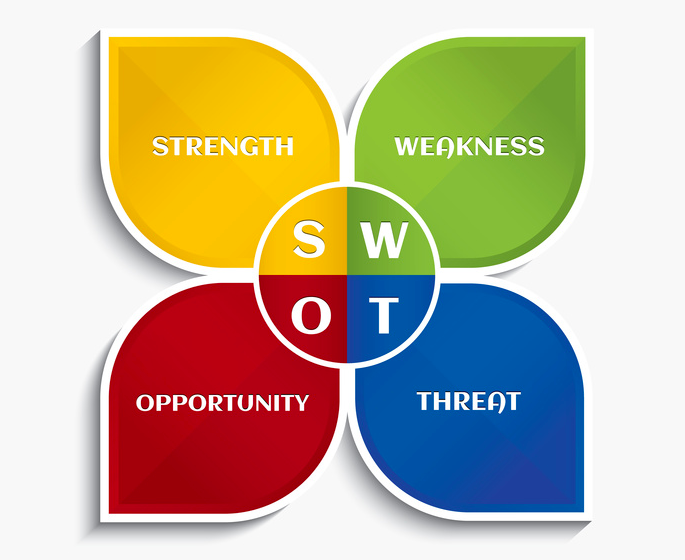
    swotAs a small business owner, you are often so focused on the day to day activities of running your business that you don’t take the time to sit down and really evaluate how your business is doing and how it compares to other businesses in the market. In order to help your business grow, it is key to get a clear idea of what your business does well and how it fits into the marketplace. A SWOT Analysis is a great tool for helping you focus on your business’ place and purpose.

    SWOT stands for Strength, Weakness, Opportunity, & Threat. Through a series of questions and analysis, a SWOT Analysis can provide you with information on the strengths and weaknesses of your business, the opportunities it has in your market, and the threats it might face in that market. From there, you can use that information to better understand the strengths and weaknesses of your business, but also to uncover new opportunities. A SWOT analysis can also be used to evaluate how your business compares to similar businesses in the marketplace, which can help you craft a more effective business strategy to help your business grow.

    So how does a SWOT Analysis work?
    It can be as easy as sitting down with your staff and going over the following questions. It can also be helpful to involve some of your clients as well, maybe by asking them to fill out a simple survey. Here are some of the things to consider and ask from each of the four categories:

    Strength – characteristics that give your business an advantage over others

    • What do you do better than anyone else?
    • What advantages does your business have over others in the area?
    • What do your clients see as your strengths?
    • What factors help you make sales?

    Weakness – characteristics that leave your business at a disadvantage over others

    • What could you improve about your business?
    • What should you avoid?
    • What do your clients see as your weaknesses?
    • What factors cause you to lose sales?

    Opportunity– instances or areas that your business could develop as an advantage

    • What opportunities do you see in your marketplace?
    • What trends are you aware of that could affect your business?
    • Weaknesses can also often open up new opportunities. How could you improve or eliminate your weaknesses?
    • Threats can also often be turned into opportunities. How can you take advantage of the threats and turn them around into new opportunities for your business?

    Threat – instances or circumstances that could have a negative effect on your business

    • What obstacles is your business facing?
    • What are your competitors doing better than you?
    • Do you have a cash flow problem, or debt?

    Once you have all these answers, it’s a good time to sit down with your team and evaluate what those answers mean to your business. By identifying not only what you do well, but also what new opportunities there are out there, and how you will handle threats and weaknesses, you will come up with an overall big picture of your business. From there, you can start to discuss and plan out strategies for taking advantage of your strengths and opportunities and managing your weaknesses and threats. In the end, what should emerge is a business plan based on all of this, with ideas on how to leverage this new information to strengthen your business and bring about growth.

    A SWOT Analysis is a simple but powerful tool for evaluating your business. By taking time on a regular basis (at least annually) to ask yourself these questions and evaluate what the answers mean for your bottom line, it can help you not only streamline your business practices but can help you better understand where your business currently is and what it will take to get it to where you would like it to be. It can also help you come up with effective strategies for distinguishing yourself in your market.

    *** This article is part of our “Time for a Tune Up” series, designed to help you tune up your business practices, get ready for the holidays, and think about your business and marketing strategies, both for the rest of this year and heading into 2015. It’s not too early to start thinking ahead, and now is the time to start preparing for even more success.

    Leave a comment
    Filed under: Salon Marketing, Spa Business Management, Spa Marketing

    Pumpkin Spice Lattes Are Out, It Must Be Fall!

    September 11, 2014

    spiceOn my way to class the other day I stopped at Starbucks, something I rarely do anymore in an effort to avoid too many extra calories and because I seem to be running late most of the time (I tend to over commit and then end up rushing…ahem…). Anyway, as I pulled up to order I saw that Pumpkin Spice Lattes are on the menu and I did a little happy dance because that means it must be Fall, right??

    As strange as that reaction is, from a marketing perspective it means they’ve trained me, using seasonality (scarcity), thereby ensuring I will find a way to get back there again for yet another of those sinfully delicious, spicy lattes. The strategy is simple, brilliant, and one that many businesses have used, with great success, through the years.

    Remember the McDonald’s Shamrock Shakes? I’m pretty sure there was nothing in them that even resembled wholesome, Irish cream, or even anything from nature as we know it, but we didn’t care. As kids, when those popped up on the menu we were super excited because a.they tasted good, and b. it meant St. Patrick’s Day was right around the corner. And while we had a broad ethnic representation in my neighborhood, as far as I know there wasn’t a soul from the Emerald Isle in sight. But we didn’t care.

    And then there were the seasonal flavors at Baskin Robbins – Baseball Nut. Fresh Peach. Black Cherries Jubilee. Yumminess by season primed us to pounce when the favorite flavors arrived, consume until we were (almost) satiated, then bid them adieu for another year.

    As an adult, it’s been my pleasure to enjoy seasonal foods from different local restaurants, a pleasure not unlike enjoying childhood treats around seasons or holidays. With seasonal foods, of course, it’s about availability for a short time, then the item disappears until this time next year when we’ll welcome the return of said dish and enjoy it to its fullest once more.

    Seasonality translates beautifully into our spa and salon marketing efforts. Through my years with SpaBoom I’ve seen an amazing number of really wonderful spa service menu items. And then we started working with salons and realized how many options there really are for hair styling and care services, something someone not natively of the business wouldn’t have immediately understood.

    A few services have stuck in my mind as particularly compelling, not always for the service itself, but often for what product the service may have incorporated. There have been blue corn scrub wraps, which are about indigenous ingredients. There have been pumpkin avocado facials, cranberry salt scrubs, seaweed wraps, cucumber facials, spicy chai pedicures, coffee scrubs and creamy, milky options designed to create suppleness.

    And who doesn’t appreciate a hair treat to prime for the next season, as well? Lovely deep conditioning oil treatments help repair Summer’s havoc, and amazing, rich colors manage to capture the light and infuse the hair with depths of hue that please the eye while creating softness and health in the process.

    I have a point, here, and it’s really this – What is your Pumpkin Spice Latte? Do you have one? If nothing jumps immediately to mind, consider adding a seasonal option to your service menu, one (or more) that add variety while creating a sense of anticipation for your clientele. Ideally, creating four of these, one for each season, makes the most sense, and then promote them in all of your content areas – your blog, email newsletters, on your website, social media, text messaging, and, yes, as in-house signage.

    Catch the eye, capture the imagination, satisfy the craving you create, then gently remove the option at a predetermined time until next year. What’s not to enjoy about setting, then exceeding, client expectations year after year?

    Leave a comment
    Filed under: Salon Marketing, Spa Business Management, Spa Marketing, Spa Technology

    Time for a Tune Up Series

    September 9, 2014

    People working cogsIt’s that slower time of year, the calm before the storm of the holiday madness. Now is a great time to get your business tuned up so you’ll be ready for the wonderful craziness that the holiday season always brings. This article is part of our “Time for a Tune Up” series to help you tune up your business practices, get ready for the holidays, and think about your business and marketing strategies, both for the rest of this year and heading into 2015.It’s not too early to start thinking ahead, and now is the time to start preparing for even more success. But first, a bit of housekeeping.

    We are all in and out of our SpaBoom accounts fairly regularly, but how often do you stop and double check that all your information is correct and that everything is set up correctly. Take some time this week to check on the following information in your SpaBoom account (you can find it all under the Setup tab):

    • Check your contact information — You can find your contact information under the Setup Tab. From there, click on “Basics” in the left hand column. Make sure your address and phone number are correct.
    • Are your locations correct — If you have multiple locations, make sure they are correct as well. You don’t want to lose a sale because the wrong address is showing on your website or your second location is missing entirely. You can check those (& add new ones) under the Setup Tab, by clicking “Locations” in the left hand column.
    • Double check your hours — Make sure your hours are correct. This is also where you can go to change your hours if you start to run extended hours during the holiday season. You can check your hours by clicking on “Hours” in the left hand column under the Setup tab.
    • Who has access to SpaBoom — Double check who can access your SpaBoom account. Each person who has access to SpaBoom needs to have their own login. Nobody should be sharing one. By clicking on “Professionals” in the left hand column under the Setup tab, you can make sure your professionals are correct, add new ones, or delete old ones.
    • Are your services up to date — Review your service menu in SpaBoom to make sure it is up to date. You don’t want to go into the holiday season with old services that you no longer offer, or new services missing from the menu entirely. You can check your services by clicking on “Services” under the Setup tab.
    • Take a look at your gift certificate designs — We are updating and adding to our gift certificate design library all the time. But if you don’t go in and check the offerings, you will never see the new designs. Take a moment to check what designs you are currently offering and see if there are any additional designs you would like to add. You can check your gift certificate designs by clicking on “GC Designs” under the Setup tab.

    Take some time today and double check that all of this information in your SpaBoom account is correct and up to date. It will save you lots of time and hassles down the road.

    That’s it for today’s tune up. Be sure to keep an eye out for the rest of the articles in our Time for a Tune Up series, as we help you get ready for the holidays and the new year.

    Leave a comment
    Filed under: General, Salon Marketing, Spa Business Management, Spa Marketing, Spa Technology

    Finding Your Brand’s Voice

    August 8, 2014

     Young girl shouting into megaphone and text come out
    We all have a voice. It represents who we are as individuals. Your brand has a voice as well, based on its personality and style, and it is important for it to be a consistent voice. But, just like you don’t speak the same to everyone in our daily lives, you don’t want your brand to do so either. And that is where tone comes into play. While your voice is always a consistent one, tone changes based on both the situation and the person you are speaking to.

    So let’s talk a little bit about finding your brand’s voice first and then we’ll focus on determining tones.

    Your voice represents who you are as an individual. For your brand, it will represent who & what your brand is. What that voice sounds like will depend on what your brand’s personality is, and we’ve already discussed creating a personality for your brand. It represents your style and helps your brand stand out in the sea of competitors. Finding your brand’s voice goes hand in hand with finding your brand’s personality, and so the same questions will come into play again:

    • Describe your business or brand with one adjective. Is it luxurious, trendy, hip, upscale, contemporary, etc?
    • What is the spirit of your brand? If you had to define the essence of your business in one word, what would you choose?
    • If your brand was a person, how would you describe him/her?
    • Who is your audience?
    • How do you want people to feel about your brand?

    Once you’ve defined your brand personality and voice, it’s time to think about tone. Tone is very distinct from voice and probably the most important part of communications with your clients. You would not use the same tone to speak to your three year old as you would to speak to a business leader in your community. And your brand should not be using the same tone for everyone either.

    Tone is tailored to the specific situation and individual to whom you are speaking. It is the single most important thing for making your communications not only feel authentic, but also empathic. Hit the right tone with your clients and you will come across as not only relatable, but also like you fully understand not only where they are coming from, but also what they need.

    Determining your different demographics is the most effective way to determine what your different tones should be. So take some time to think about the different demographics of your business and the differing situations in which you need to communicate with different groups of clients. Your communications with your VIP clients should sound very different in tone than the communications with your summer Teen Spa  clients. But your brand personality and voice should shine through to both groups.

    Defining your brand’s voice and tone is the single best way to humanize your brand. This means you can better communicate with your clients (& potential clients) and makes it easier to start and maintain a conversation with them. Nail those two things and you are well on your way to building a relationship with your clients.

    Leave a comment
    Filed under: Salon Marketing, Spa Business Management, Spa Marketing

    Creating A Personality For Your Brand

    August 7, 2014

    One in a millionBrand Identity and Personality are distinct but closely related. Your brand identity is the visual image you create to communicate with your clients, including your logo, color scheme, or other repeating visual details. It is anything that your client (or potential client) sees that allows them to visually identify your business as distinct from your competition. Your brand personality is the emotional association that a client (or potential client) experiences when they think of your brand or see your logo. Personality helps create the emotions your client (or potential client) feels when they think of your brand or see your logo, as if they are thinking of a person rather than just a brand.

    Knowing your brand personality can help determine how you communicate with your clients and how your business stands out in the community, especially compared to your competitors. Brand identity makes you recognizable. Brand personality makes you relatable.

    Having a brand personality ensures that your communications will all look and feel like they are coming from the same place. It also allows you to be a storyteller and to become a business that people want to get to know better. People will always be more eager to speak about “a someone” rather than “a something”. By giving your brand a personality that comes across as more authentic in communications, you’ll get your clients excited and they’ll want to talk about you with their family and friends.

    But how do you figure out what your brand personality is? Here are a few questions to consider when creating (or discovering) your brand personality.

    • Describe your business or brand with one adjective. Is it luxurious, trendy, hip, upscale, contemporary, etc?
    • What is the spirit of your brand? If you had to define the essence of your business in one word, what would you choose?
    • If your brand was a person, how would you describe him/her?
    • Who is your audience?
    • How do you want people to feel about your brand?

    These questions should start to give you an idea about what the personality of your brand looks like. From there you can start to craft a personality to represent your brand.

    Once you have created your brand personality, now is the time to cultivate it through your social media interactions, your blog, and your email marketing. It is a powerful social media tool for creating a relationship with your clients and for attracting the type of clients you really want. Don’t forget that brand personality is about the emotional association your clients feel when they see your logo or think about your brand. It is more about fostering a relationship with your clients rather than them just being able to identify your logo.

    By having a strong brand personality, your clients will start to feel more like they have a personal relationship with your brand rather than just recognizing and liking your business. It gives your clients someone to talk about rather than just a brand. And that makes it much easier for them to become an advocate for your brand.

    Leave a comment
    Filed under: Creating Customers, Salon Marketing, Spa Business Management, Spa Marketing

    Creating A Strong Brand Identity

    August 5, 2014

    Fingerprint green treeYour brand is so much more than just a logo or a name. It is a representation of what your business is and the experience you provide through your products and services. Your brand helps to differentiate you from other businesses in your area.

    Brand management is the analysis and planning of your brand in your market, including planning out how to focus on your target demographic & how to maintain a good reputation for your brand. Knowing how to effectively manage your brand is key in this economy to ensure that your business continues to flourish.
    But how do you make sure your brand is effective? Let’s take a look at some of the key things to consider when creating and managing your brand identity.

    Develop a Personality and Image for your Brand
    Your brand elicits emotions in your clients (both current and potential) when they see it. What sort of ideas and emotions do you want your brand to convey? An easier way to think about it is this: If your brand was a person, how would you describe their personality? Relaxed, luxurious, pampering, trendy, etc? From there, you can start to think about what your vision is for the brand and what your long-term goal is. In other words, what is your mission statement for your business and who is your target audience? All of these things put together help you develop the personality for your brand.

    Create a Memorable Logo and Tag Line
    Your logo is the most effective tool in building visual recognition for your brand. So take some time and effort to make it the most effective logo you can. Once you have developed the personality or image for your brand, creating a logo is the next step. Working with a graphic designer for this step can help you create the most powerful logo & color story to go with it. But don’t just stop there. Make sure that all of your communications with clients contain your logo and the color story drawn from that logo. Whether it is your website, social media, email communications, or even your collateral such as flyers, signage, or business cards, make sure your logo and color story carry throughout. Being consistent in your color story and logo will make your brand much more recognizable, and therefore more memorable.

    Develop a Voice for your Brand
    Developing a voice for your brand, one that matches your brand image, is the number one way to come across as authentic in your communications. You want your voice to reflect the personality and image of your brand. For instance, a luxury spa will have a very different voice than a trendy nail salon. By matching the voice of your brand to the personality and image of your business, your communications will come across much more effectively. This helps to tie your communications into your brand identity and makes your brand, and your business, much more relatable and recognizable.

    Creating a powerful brand and managing it effectively is key to distinguishing yourself in the marketplace. It can help to focus your business and makes you more recognizable to clients (both current and prospective). It also gives you a strong foundation upon which to leverage and grow your business.

    Leave a comment
    Filed under: Creating Customers, Salon Marketing, Spa Business Management, Spa Marketing

    It’s Your Blog: Write What You Know

    August 1, 2014

    overwhelmed_womanWriters sometimes experience ‘white page syndrome’, that dreaded condition where you know you need to produce relevant content for an article, and, for some reason, the muse refuses to produce worthwhile fodder for your effort.

    Muses are fickle, and have their own agendas, so any experienced writer knows that having a more concrete approach to writing pays off. Your blog falls directly into this arena, doesn’t it? Do you find yourself wishing you had something to say? Do you become intensely self-critical, and edit yourself into nonperformance? Do you procrastinate until you finally release yourself from the obligation to write ‘until another day’, where you most likely will repeat the avoidance?

    Guess what? You’re not alone! Very few people really enjoy writing. Seriously, most of the world prefers to have other people handle their content work, and trust me, there is no shame in that, none at all. But you can break through the content wall, the key is a simple plan and consistent follow through.

    Set a schedule. If you create a real schedule around producing your blog posts you’ll feel an obligation to produce, and when you’re focusing elsewhere, like on providing client services, you brain can also be working on possible future topics, or be developing one you’ve already slated for creation. Start simple, maybe by opting for two articles a month at first. In time, increase that to one a week. Your clients will gradually build an expectation around your blog posts, and you’ll garner interest in the form of readers and comments, both of which help direct your future topic efforts.

    Mix it up.  Once you’ve set a theme of sorts for your articles, think variety. People love to feel like they have the inside track on information, so if you’ve introduced a new service to your menu, be sure to share your rationale on why you chose that, describe it in detail, and request feedback in your article. Are you active in your community? Be sure to mention events and share your passion for charitable efforts or various causes. Sharing your enthusiasm will engender more interest for a given endeavor as well as enlighten your clients about your breadth. When they begin to see you for more than a great salon or spa, their sense of loyalty and support will grow as well. Did you just bring in a new product line? Talk about it on your blog! Why did you choose it? What is special about it? Is there a relevant back-story to share? Over time you’ll find yourself viewing daily activities in your spa, salon or massage practice as potential topics for blog posts, and you’ll probably want to adjust your schedule to accommodate more articles.

    Writing is a skill, one that simply needs practice to become adept at. Simple, clean, direct writing on topics that you truly care about will go a long way to filling your blog space and engaging your clients.

    Leave a comment
    Filed under: General, Spa Business Management

    • « Previous Page
    • 1
    • 2
    • 3
    • 4
    • 5
    • 6
    • …
    • 10
    • Next Page »

    spaboom
    800.940.0458
    su*****@******me.com

    Mailing Address
    PO BOX 35160
    Albuquerque, NM 87176

    • Facebook
    • Twitter
    • Login
    • Support

    Stay in touch with the latest marketing technology and updates for your spa, salon or massage therapy practice. Sign up now and receive a marketing gift for your spa, salon or massage therapy practice.

    Copyright © 2004-2026 · SpaBoom Sevence, LLC d/b/a SpaBoom, all rights reserved. • Email • Fine Print